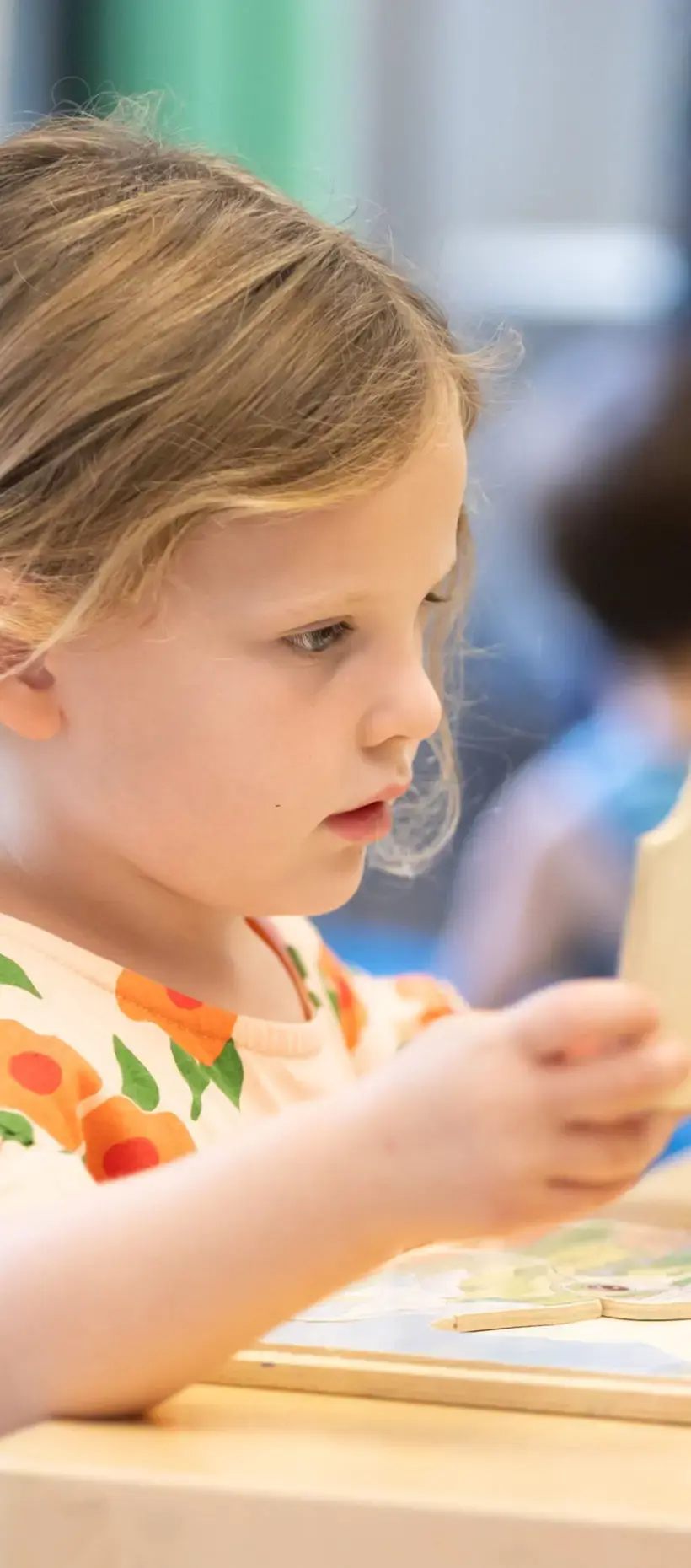
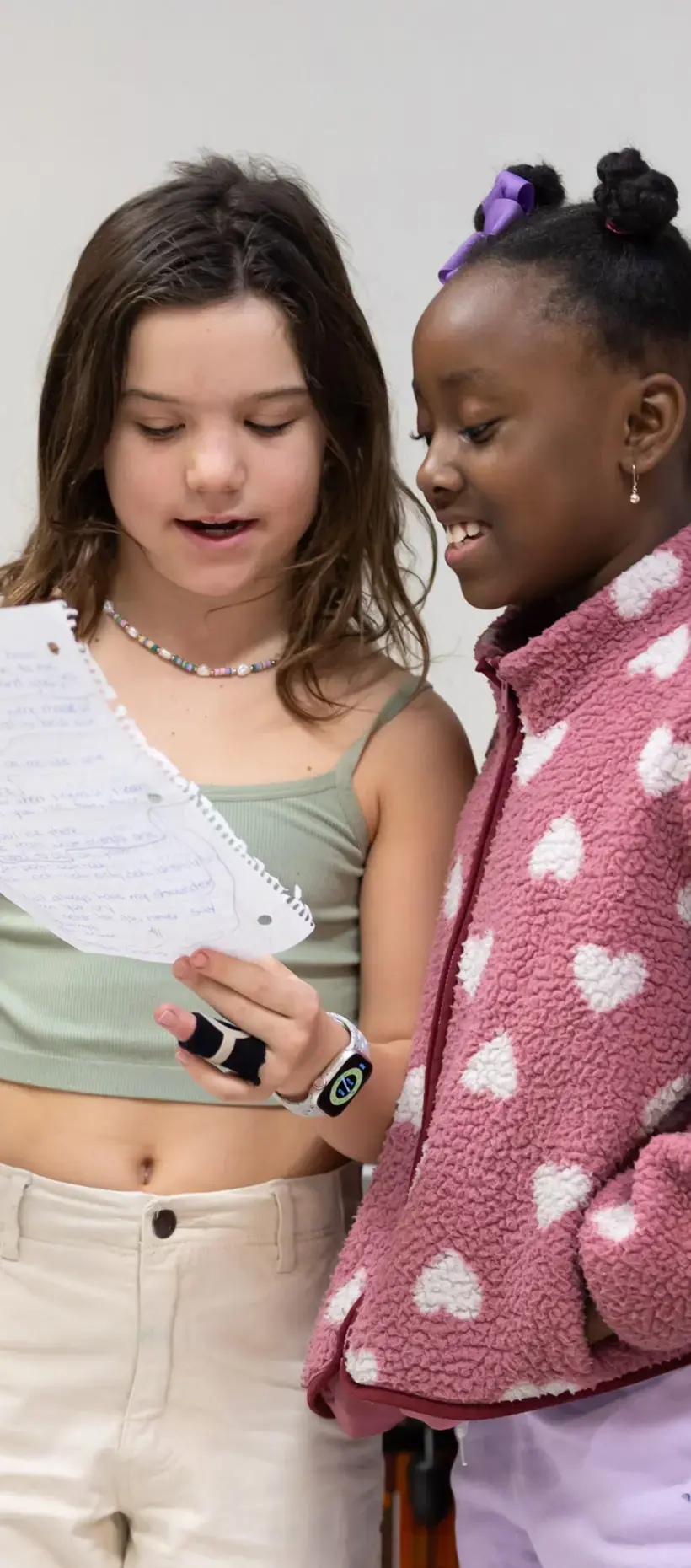
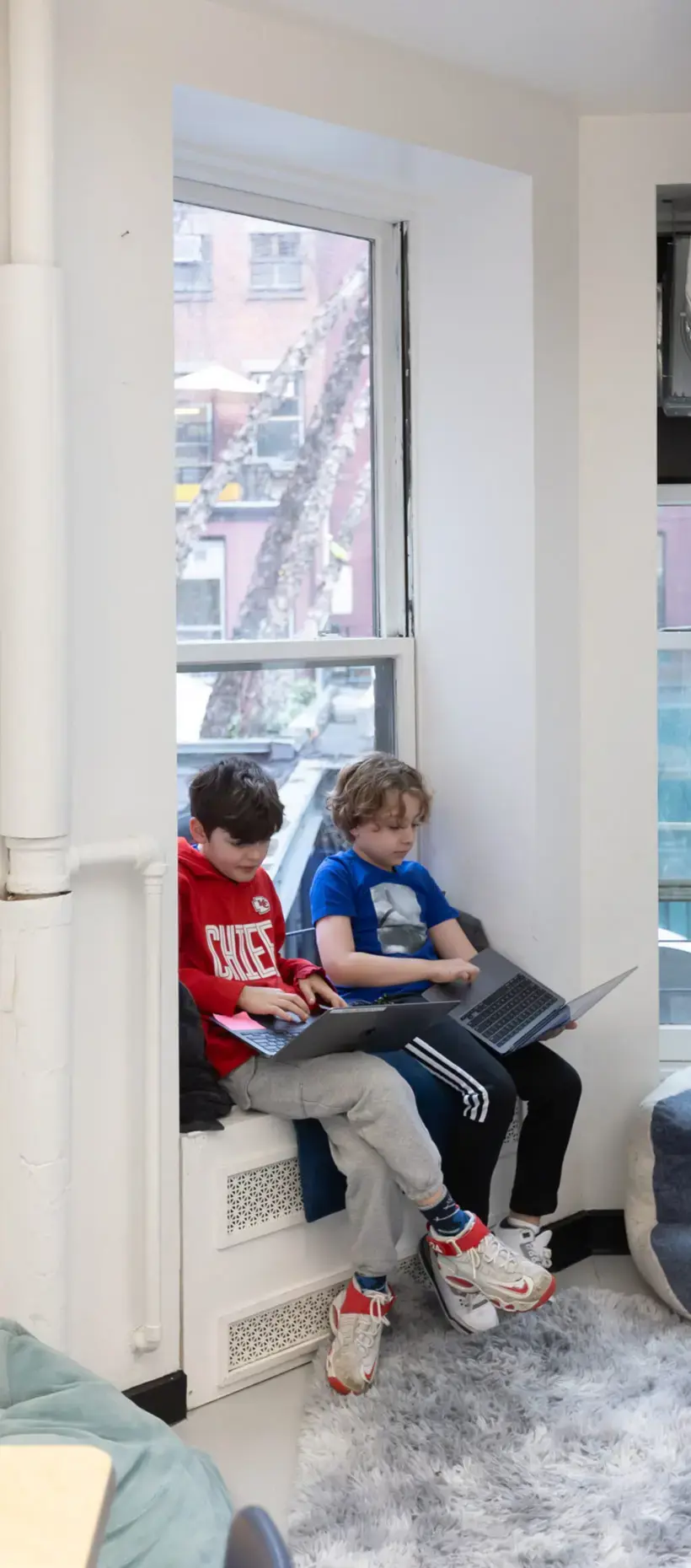
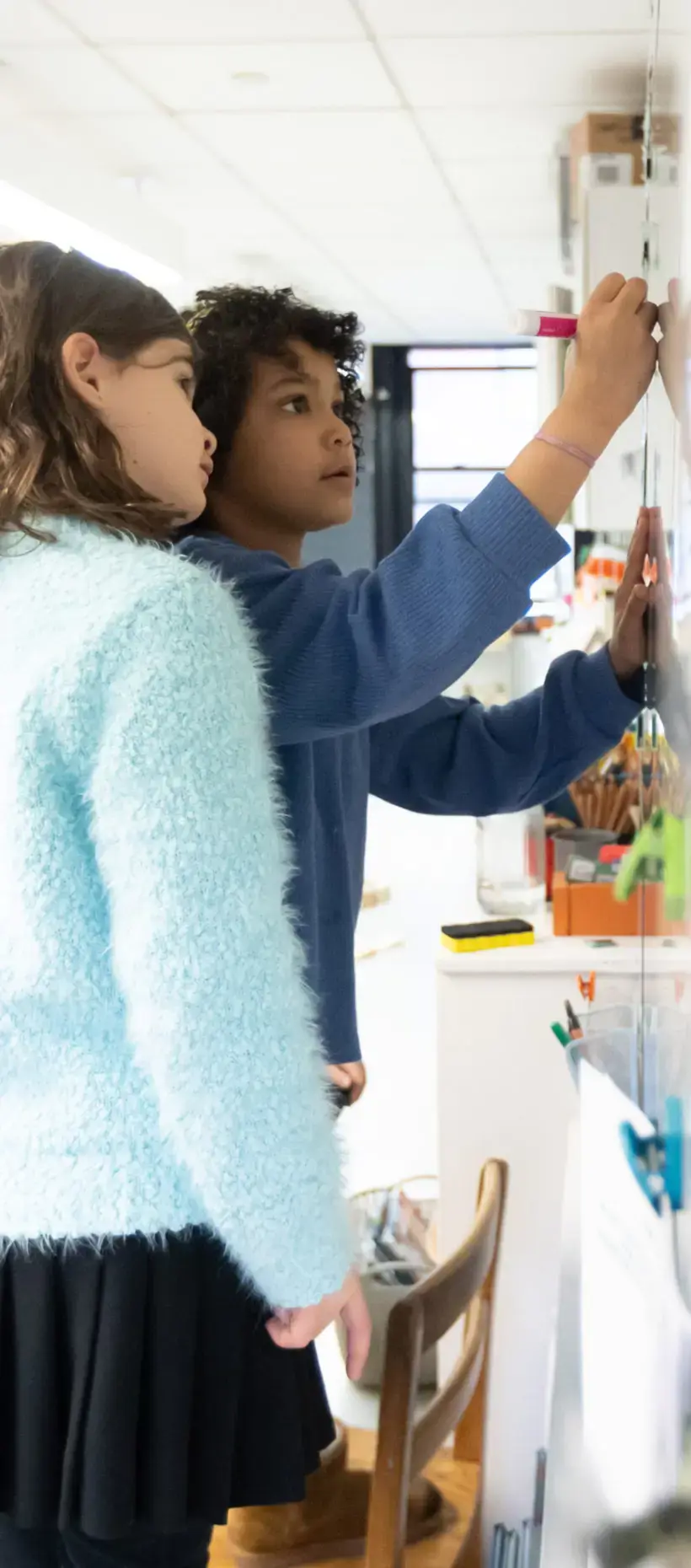
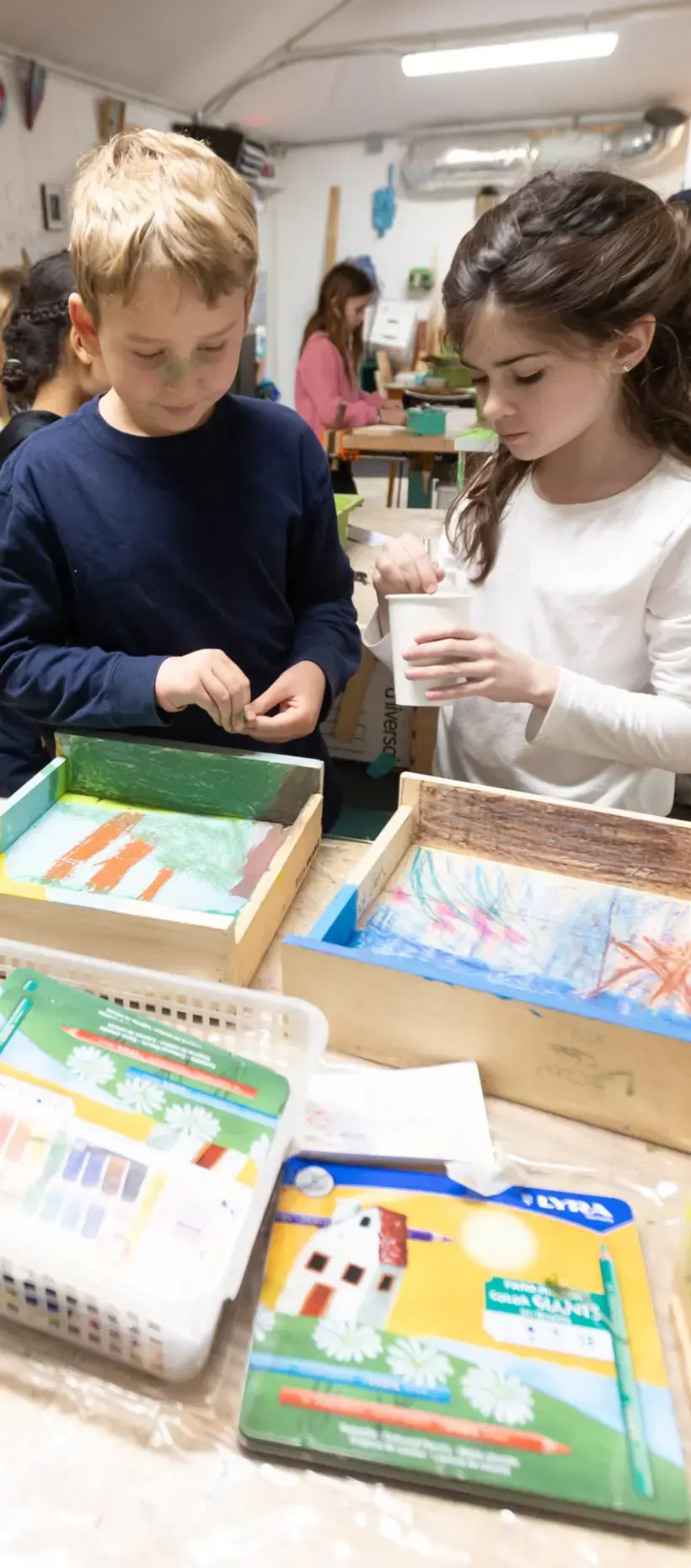
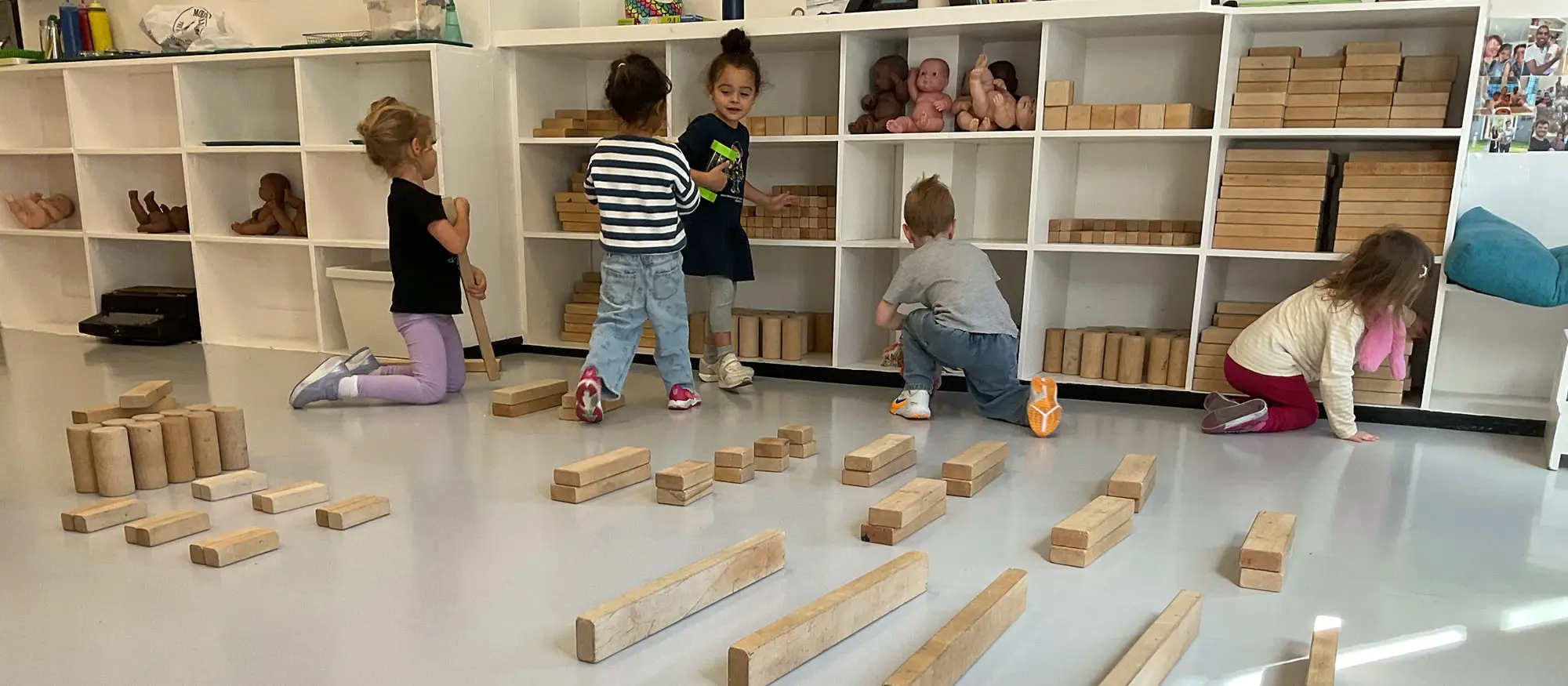
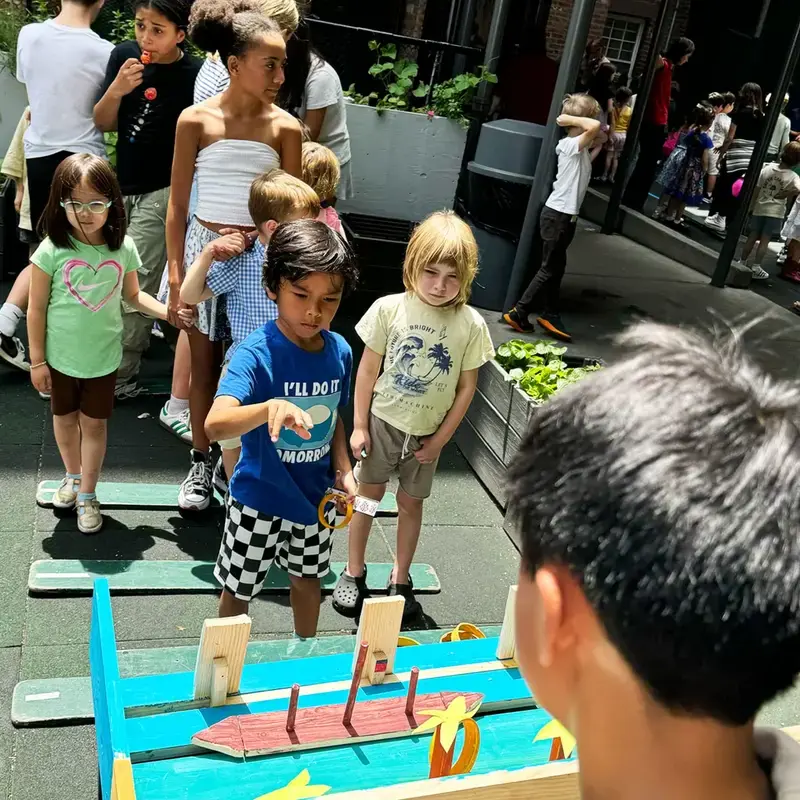
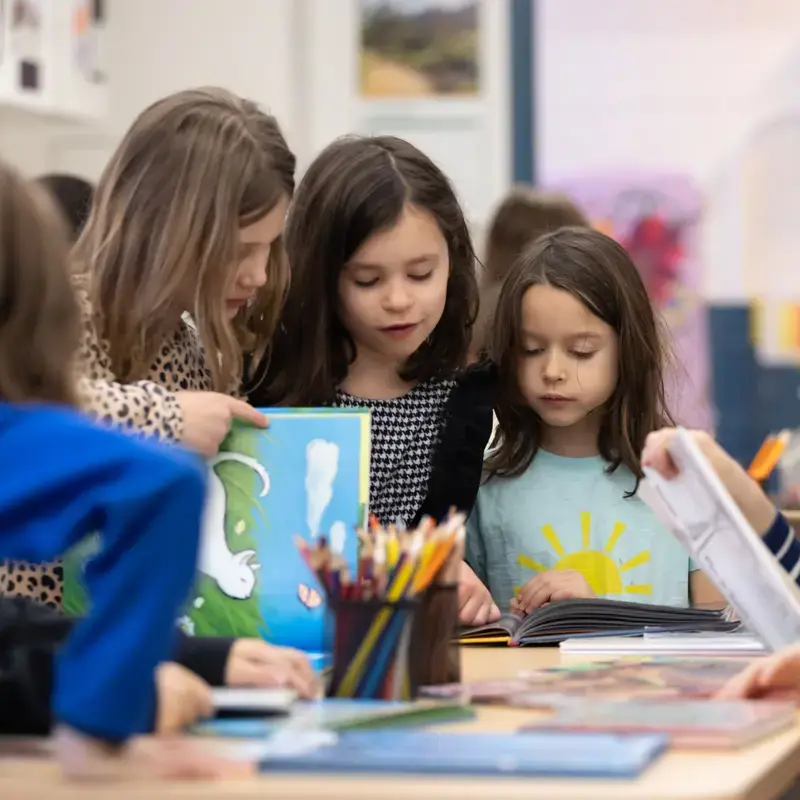
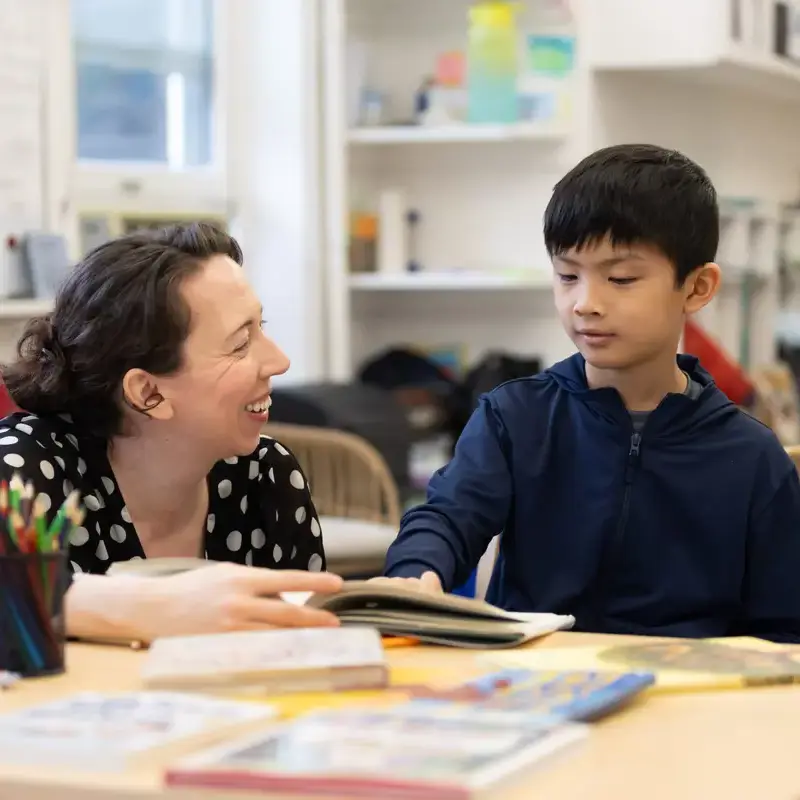
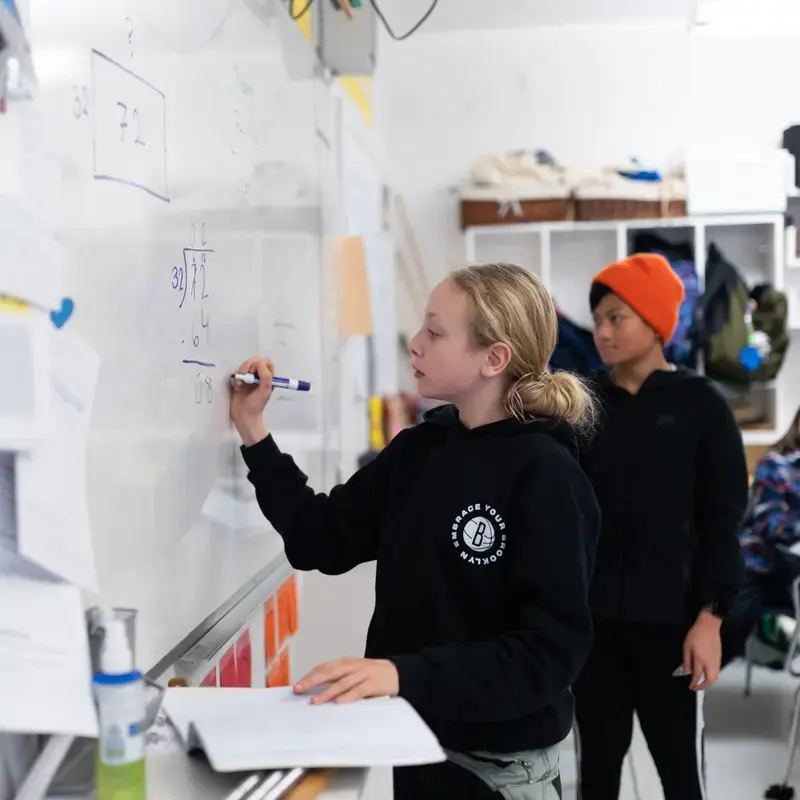
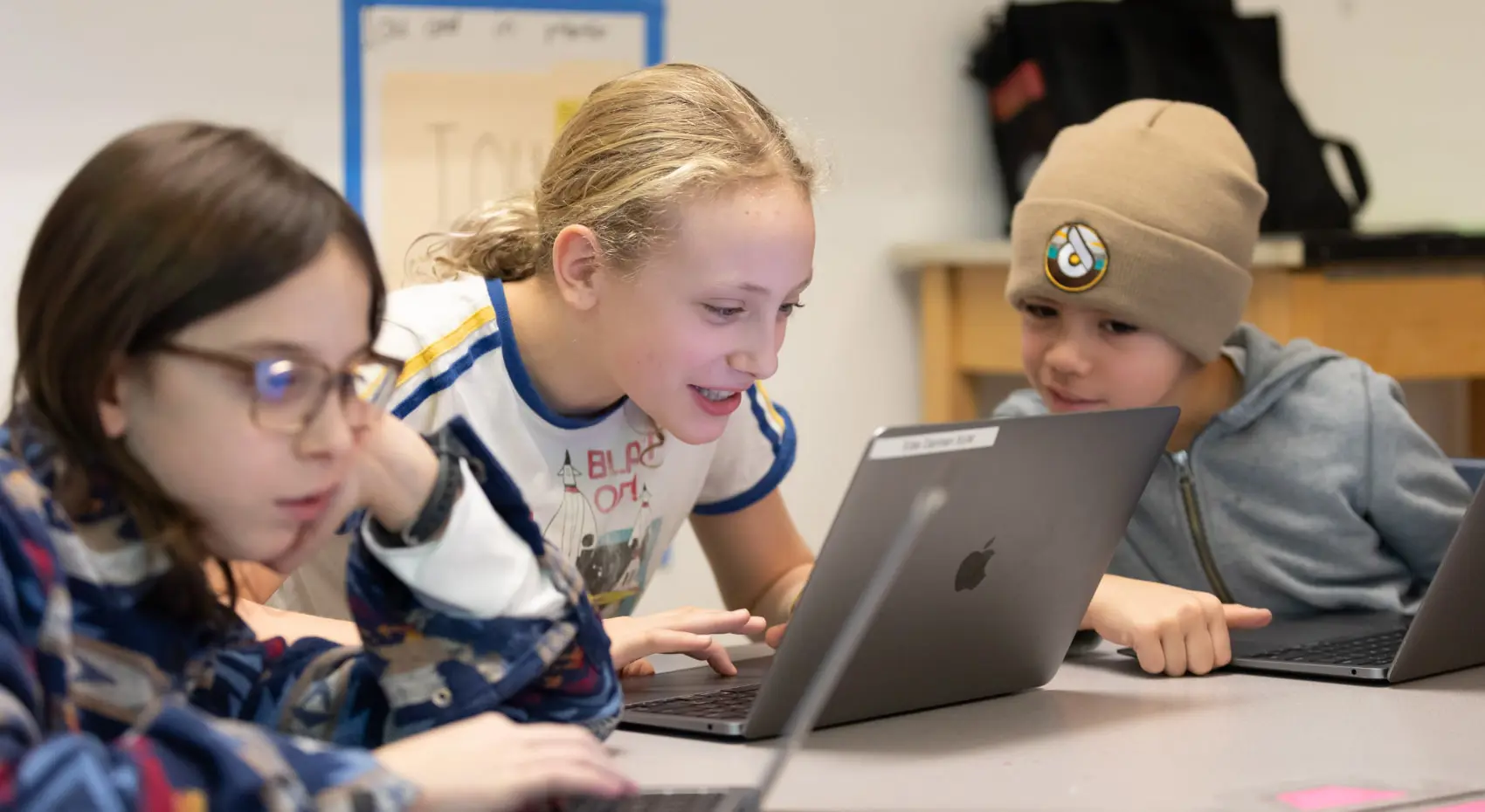
We believe math is best learned through a balance of hands-on, purposeful experiences and intentional, research-proven curriculum and instruction. Our math approach emphasizes exploration through grappling with real-world math problems and communicating mathematical thinking through robust collaboration.
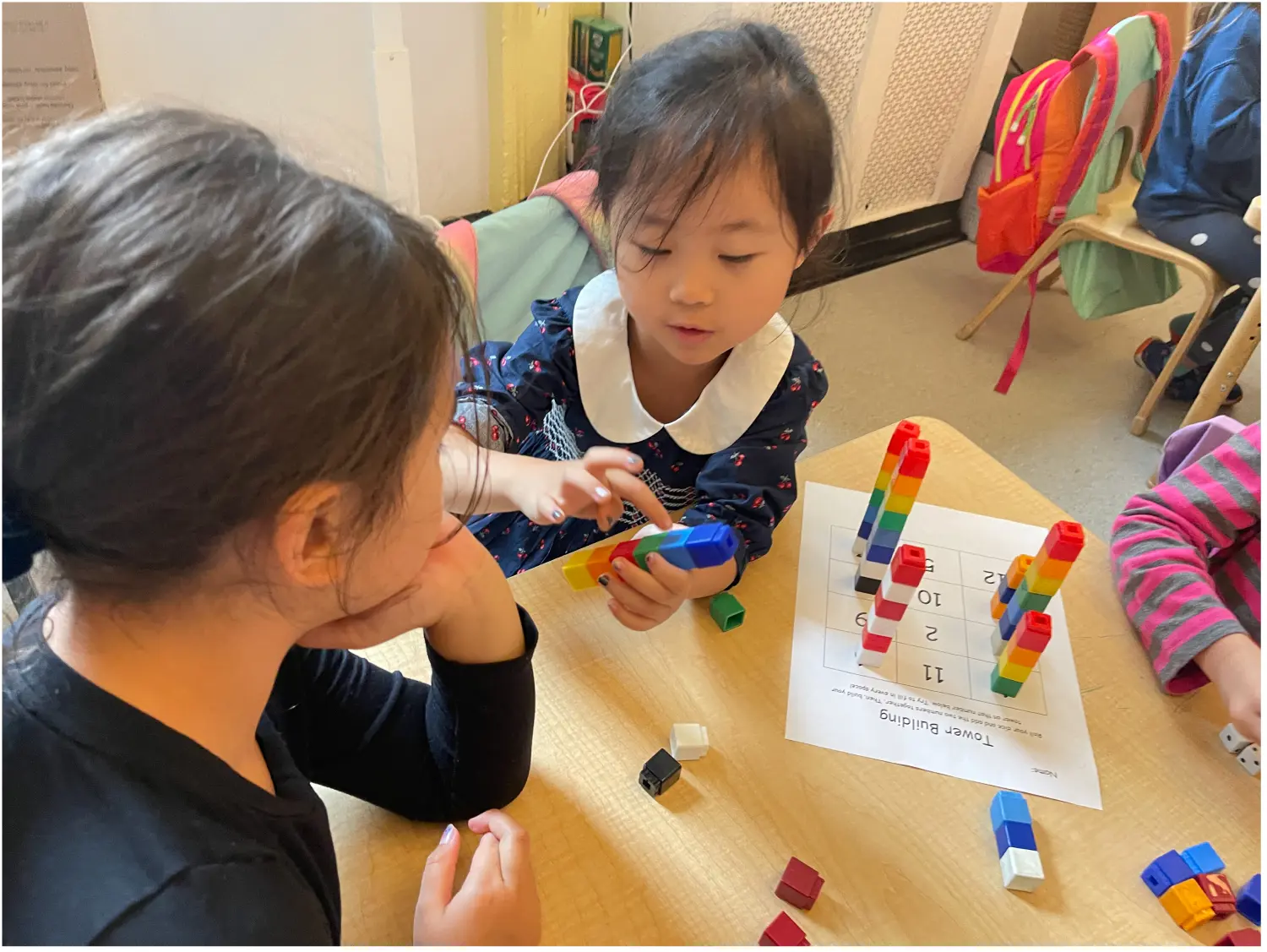 We introduce students to mathematical concepts through play and investigation, and then guide students towards mastery of procedural fluency and deep conceptual understanding through continued explicit practice. By the end of second grade, students demonstrate strong, flexible math skills as well as confidence in their ability to approach complex mathematical questions on their own. Our approach is rigorous, backed by research, and tailored to each child’s readiness. We introduce students to mathematical concepts through play and investigation, and then guide students towards mastery of procedural fluency and deep conceptual understanding through continued explicit practice. By the end of second grade, students demonstrate strong, flexible math skills as well as confidence in their ability to approach complex mathematical questions on their own. Our approach is rigorous, backed by research, and tailored to each child’s readiness.
Nursery and Preschool Years (IIs - IVs)
• Counting up to 10
• Sorting, classifying, and comparing objects
• Recognizing numbers and their corresponding quantities
• Exploring shapes, patterns, and spatial relationships through play
• Hands-on measurement activities
• Developing math vocabulary such as “more,” “less,” “longest,” and “shortest”
• Beginning one-to-one correspondence and data collection
Kindergarten (Vs)
• Deepening number sense: counting, number names, one-to-one correspondence
• Examining part-whole relationships and comparing quantities
• Exploring concepts of addition and subtraction and their functions
• Recognizing and creating patterns with shapes
• Expanding data collection
• Understanding measurement with size, weight, and volume of everyday objects
• Understanding days of the week
• Developing mathematical explanations through collaborative practice and math conversations
• Expanding math vocabulary to include terms like “equal,” “greater than,” “add,” and “take away”
1st Grade (VIs)
• Building place value understanding to 100 through practice with different tools and real-world application
• Solidifying fluency with addition and subtraction facts to 20
• Cultivating multiple strategies to solve addition and subtraction problems
• Understanding estimation as a useful tool
• Understanding basic geometry concepts, shape identification, and symmetry
• Exploring data collection and graphing (bar graphs, surveys)
• Applying conceptual understanding to solve single-step word problems
• Explaining mathematical thinking and supporting their ideas with strong conceptual awareness and mathematical language
2nd Grade (VIIs)
• Expanding place value understanding to 1000 through practice with different tools and real-world application
• Refining addition and subtraction strategies to be increasingly accurate, fluid, and efficient
• Understanding connections between place value and money concepts
• Expanding geometry awareness and language to describe regular polygons and arrays
• Analyzing data with line plots, Venn diagrams, and bar graphs
• Introducing units of time and standard measurement
• Introducing concepts of fractions and partitioning objects
• Applying conceptual understanding to solve more complex, multi-step word problems
• Explaining mathematical thinking and supporting their ideas with strong conceptual awareness and mathematical language in conversation and through writing, visual representations, and symbols
Read about math for Grades 3-8
|