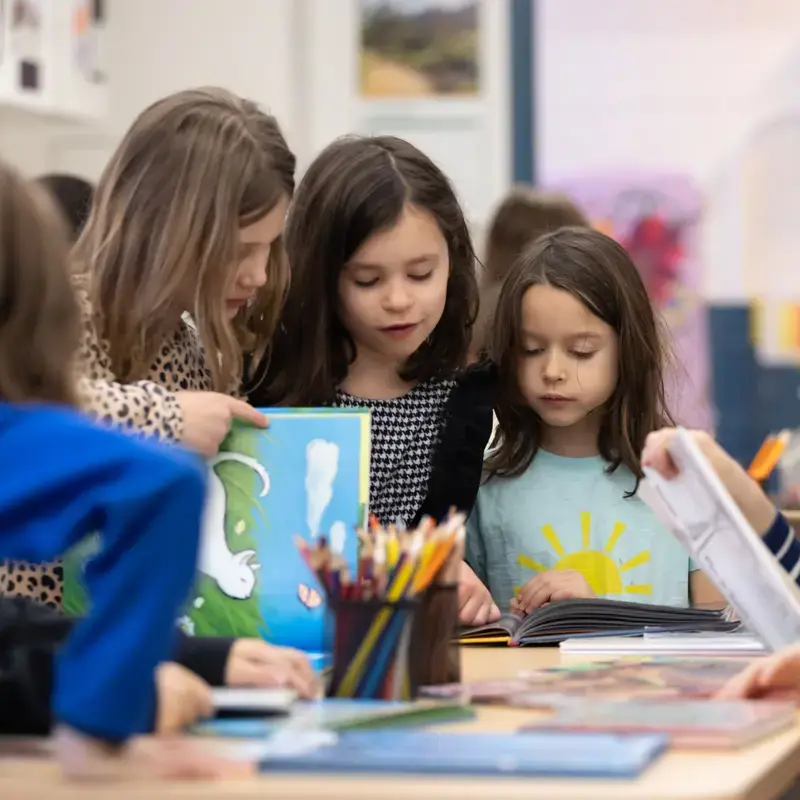
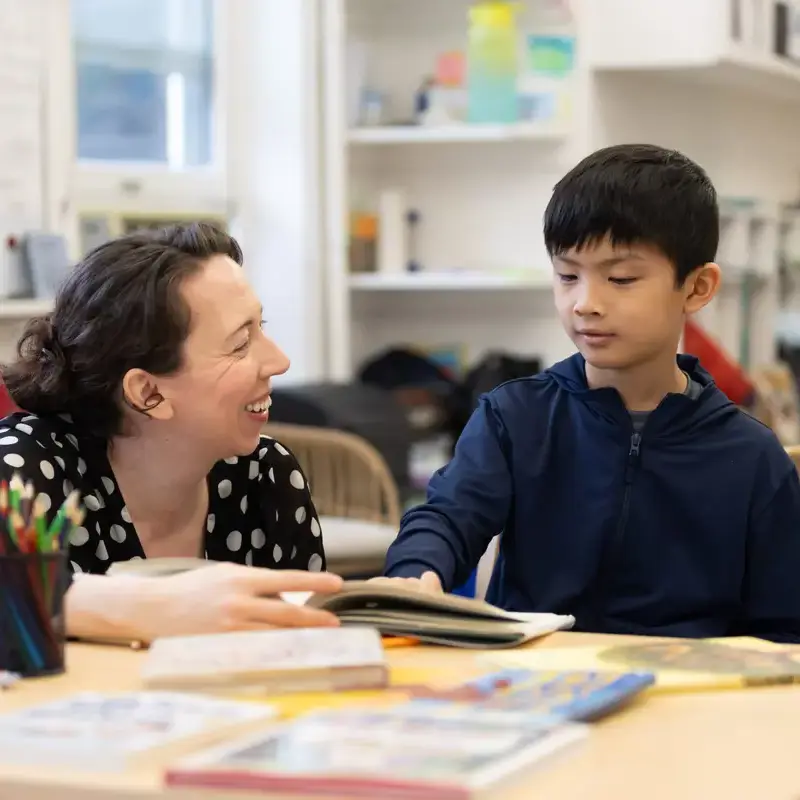
We understand that children develop literacy skills at different times and in different ways. Our teachers expect a wide range of reading and writing abilities and are prepared to meet children wherever they are in their development. Our responsive, research-backed approach combines engaging and diverse language experiences with direct reading instruction differentiated to meet the needs of a variety of readers.
 We provide just the right amount of challenge to push each child forward, using a structured and systematic program rooted in phonics and comprehension skills. Our goal is to build strong decoding and comprehension skills, confidence, and a deep appreciation for and love of reading and writing. We provide just the right amount of challenge to push each child forward, using a structured and systematic program rooted in phonics and comprehension skills. Our goal is to build strong decoding and comprehension skills, confidence, and a deep appreciation for and love of reading and writing.
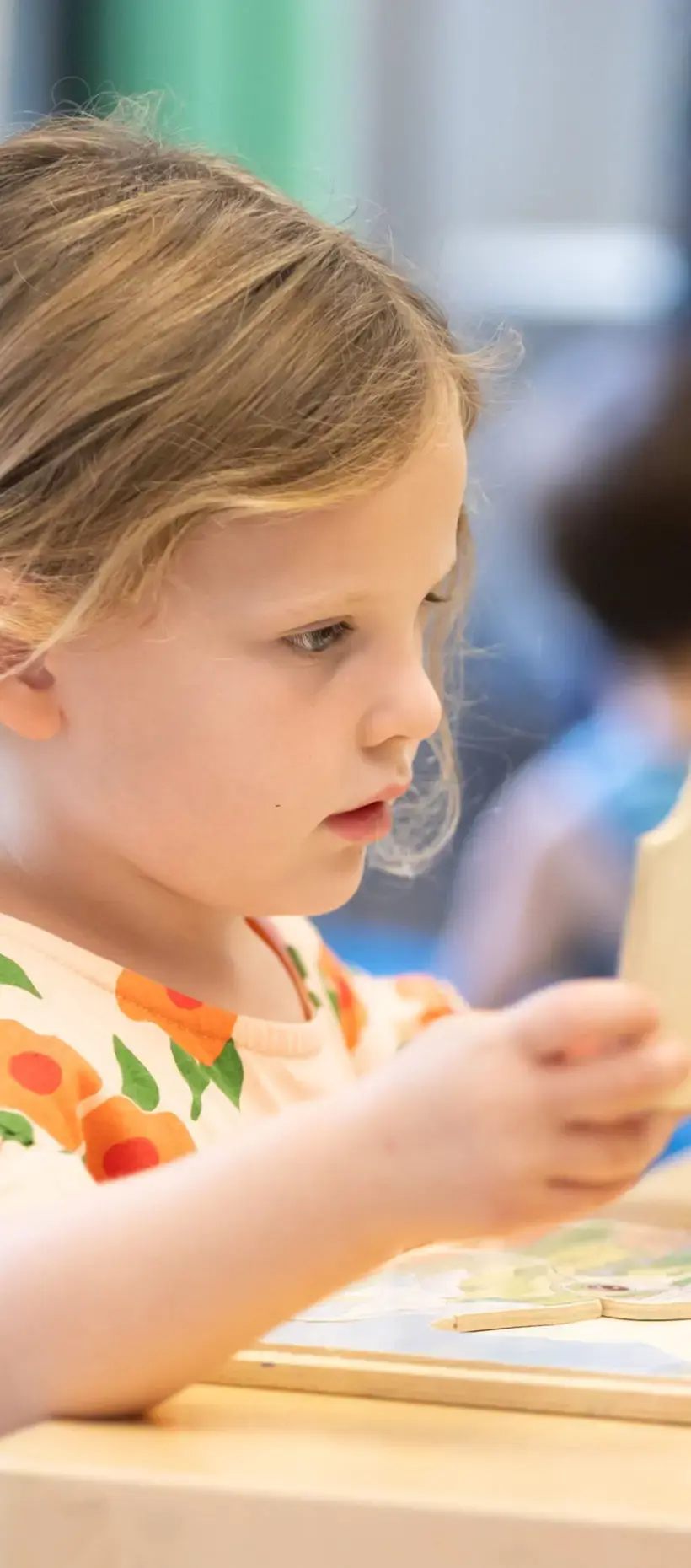
Nursery and Preschool Years (IIs - IVs)
• Storytelling, dictation, songs, classroom library
• Growing vocabulary
• Honing expressive and receptive language
• Print awareness: understanding that print carries meaning
• Letter/sound recognition
• Recognizing and writing own name and names of peers
• Beginning rhyming
• Developing symbolic thinking skills through pretend play
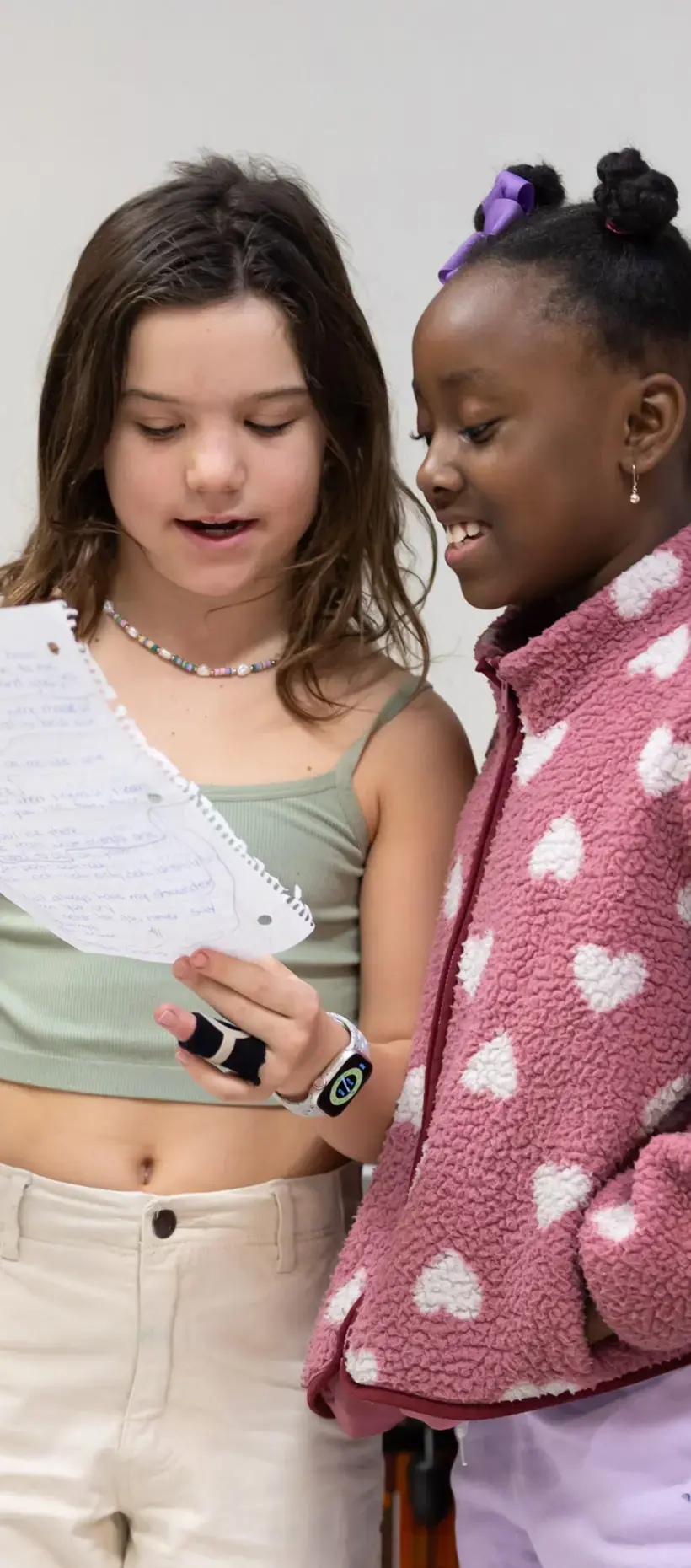
Kindergarten (Vs)
• Developing phonemic awareness
• Letter formation
• Dictation
• Sound-spelling strategies for independent writing
• Solidification of rhyming skills
• Book-making
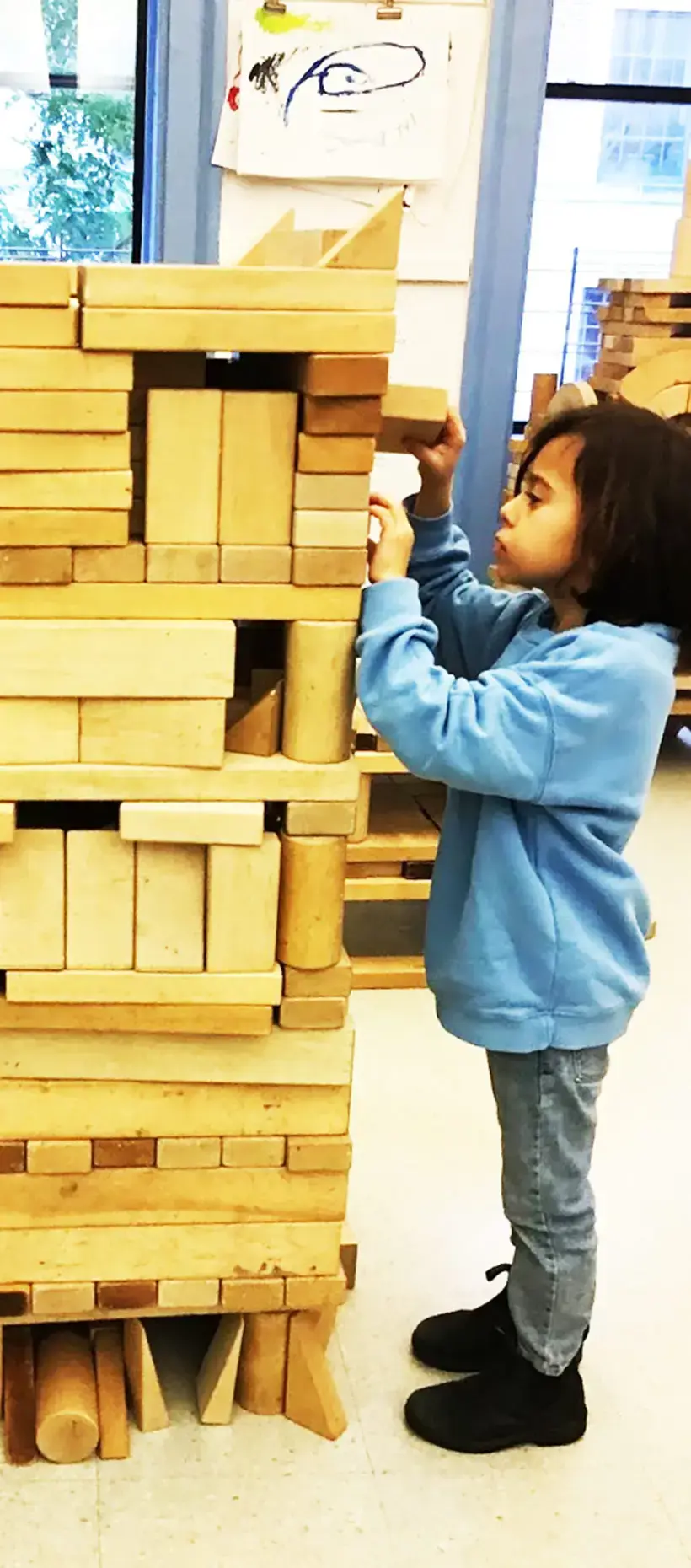
• Creating elaborate narratives through block-building work
• Using environmental print as a tool
• Assessment of developmental benchmarks
• Full-group shared writing of letters, lists, questions, announcements
• Comprehension of fiction and non-fiction texts read aloud
1st Grade (VIs)
• Daily small-group phonics instruction
• Mastery of complex letter sounds: vowel teams, digraphs, dipthongs, blends
• Comprehension strategies
• Systematic Orton-Gillingham approach
• Decoding texts and targeted word study
• Continued practice with letter formation
• Fiction and non-fiction writing with beginning, middle, and end
• Understanding sentence and story structure
• Comprehension of fiction and non-fiction texts
• Personal narratives
• Punctuation
• Progress assessed three times per year
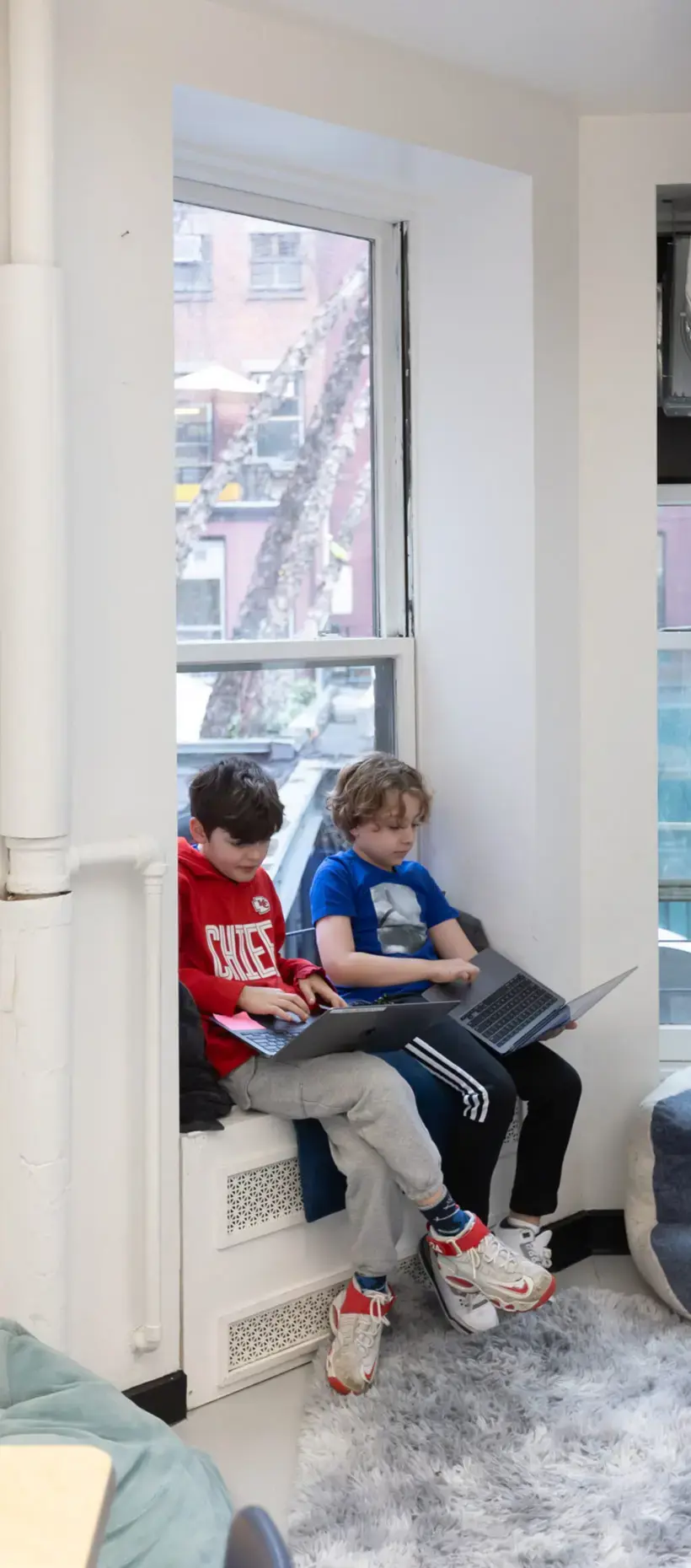
2nd Grade (VIIs)
• Reading block increases to 45 minutes daily
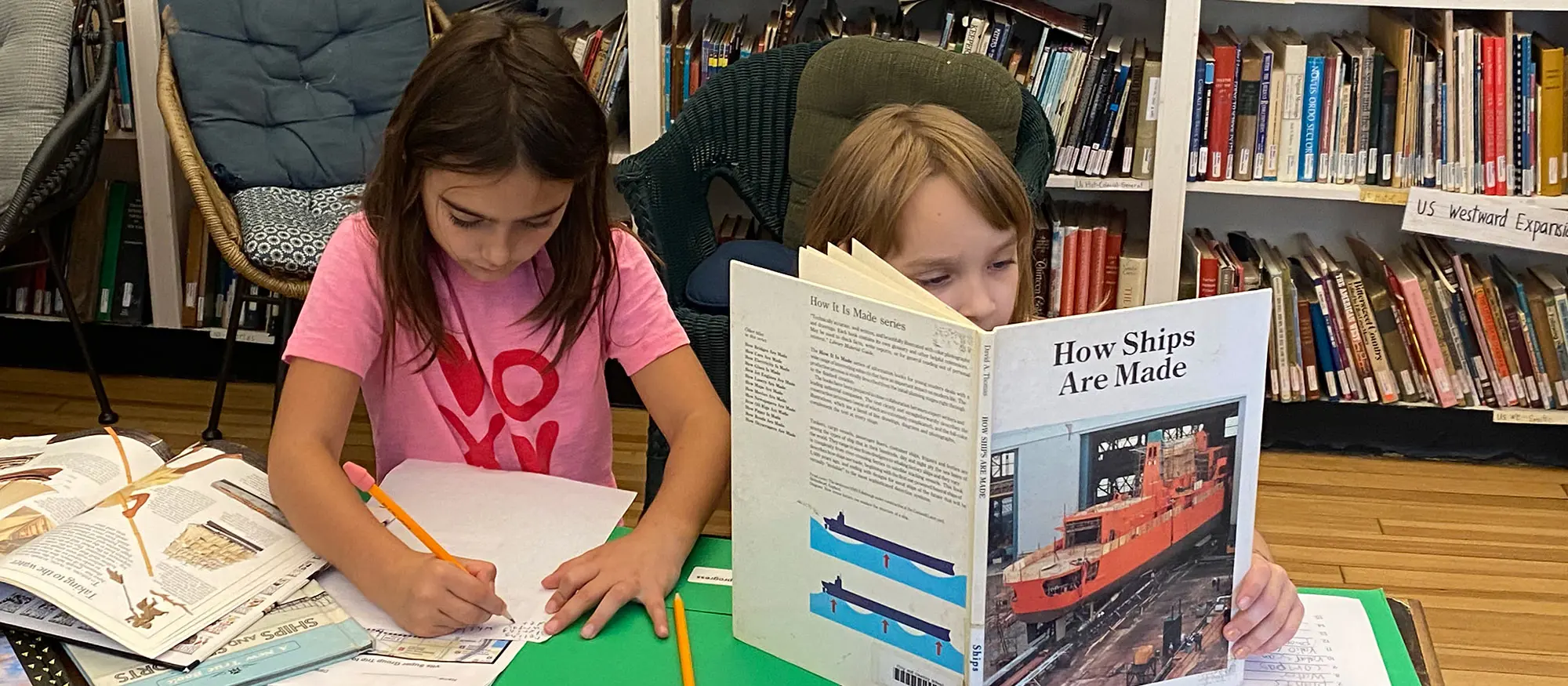
• Small-group instruction; focus on fluency and comprehension
• Qualitative Reading Inventory (QRI) and phonics assessments to guide teaching
• Multi-syllabic words; prefixes and suffixes
• Weekly library visits
• Reading logs
• Self-selected “just right” books
• Reading and writing applied daily in social studies work
• Responding to short prompts about nonfiction research topics
• Comprehension of nonfiction texts
• Writing narrative stories
• Elements of fiction texts: character, plot, deeper meaning
By the end of 2nd grade, students exceed grade-level reading benchmarks through balanced instruction that combines systematic phonics with deep comprehension, vocabulary development, and making meaning from text. This approach helps children become confident, thoughtful readers who view reading as both a skill and a source of joy.
Learn about literacy through 8th grade
|